
Introduction
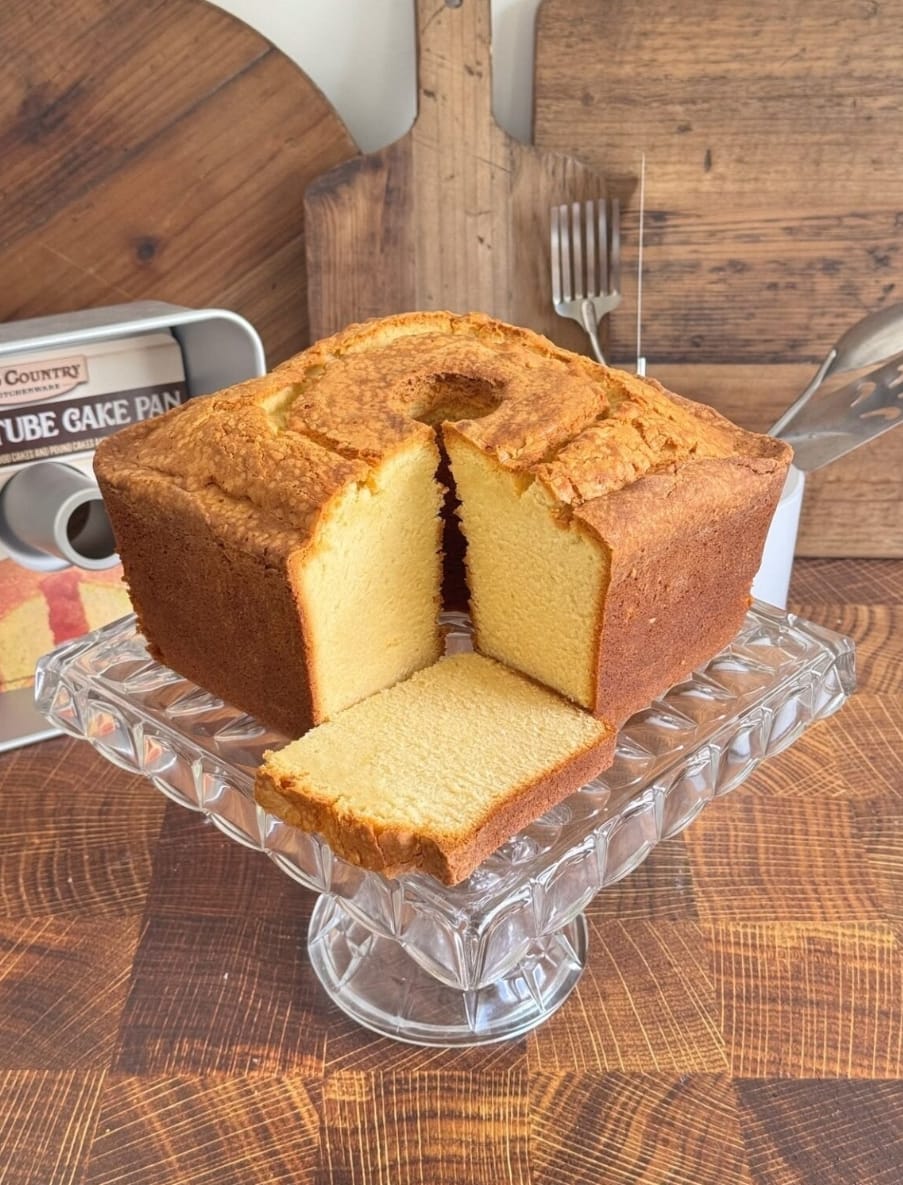
Pound Cake is a classic baked good renowned for its rich, buttery taste, soft crumb, and golden crust. Simple in its fundamental ratio yet deeply satisfying, it serves as a foundational recipe in Western baking, enjoyed on its own or paired with fresh fruits, creams, and glazes.
Origin and Cultural Significance
Originating in Northern Europe during the early 18th century, the cake derived its name directly from its structural formula: one pound each of flour, butter, sugar, and eggs. Because literacy and precise measuring tools were not widespread at the time, this simple 1:1:1:1 weight ratio made the recipe easy to memorize and execute. As the recipe crossed the Atlantic, it became a cornerstone of American baking—particularly in Southern cuisine, where family variations incorporating sour cream, cream cheese, or regional extracts were passed down through generations.
Description
A traditional pound cake features a dense, velvet-like interior with a fine crumb structure and a golden, slightly crisp exterior crust. Unlike light sponge cakes, a pound cake has a substantial, melt-in-your-mouth weight and a rich, buttery aroma that deepens after sitting for a day.
Ingredients Quantity
(Yields 1 standard 9×5-inch loaf or 10-inch tube cake / 12–16 servings)
Main Ingredients
- Unsalted Butter: 1 lb (4 sticks / 450g), softened to room temperature
- Granulated Sugar: 1 lb (2 cups / 450g)
- Large Eggs: 1 lb (approx. 8 large eggs), room temperature
- All-Purpose Flour or Cake Flour: 1 lb (approx. 3½ to 4 cups / 450g), sifted
- Salt: ½ tsp
Flavoring
- Pure Vanilla Extract: 2 tsp
- Milk or Heavy Cream (Optional): ¼ cup (60ml), for added moisture
Instructions
- Prep Equipment: Preheat oven to 325°F (165°C). Generously grease and flour a loaf pan or tube pan.
- Cream Butter and Sugar: In a large bowl, beat the softened butter and sugar on medium-high speed for 5–7 minutes until light, fluffy, and pale yellow.
- Incorporate Eggs: Add eggs one at a time, beating thoroughly after each addition to maintain the emulsion. Mix in the vanilla extract.
- Fold Dry Ingredients: Gradually fold in the sifted flour and salt on low speed just until combined. Do not overmix.
- Bake: Pour the batter into the prepared pan and smooth the top. Bake for 60 to 75 minutes (or until a toothpick inserted into the center comes out clean).
- Cool: Let the cake cool in the pan for 15–20 minutes before inverting onto a wire rack to cool completely.
Optional Additions
- Citrus Zest: Add 1–2 tbsp of fresh lemon or orange zest to the butter-sugar mixture for a bright citrus note.
- Cultured Dairy: Substitute a portion of the butter or liquid with ½ cup of sour cream or cream cheese for extra moisture and tang.
- Warm Spices: Incorporate ½ tsp of ground nutmeg or cinnamon into the flour.
Tips for Success
- Temperature Matters: Ensure butter and eggs are strictly at room temperature to prevent the batter from curdling or separating.
- Take Time Creaming: The initial creaming step traps air in the fat, acting as the primary leavening agent for the cake since traditional recipes don’t use baking powder.
- Measure Accurately: Weighing ingredients (1 pound each) yields far more consistent results than measuring by volume (cups).
Nutritional Information
(Estimated per slice, based on 14 servings)
- Calories: ~380–420 kcal
- Protein: 5g–6g
- Total Carbohydrates: 42g–48g
- Dietary Fiber: < 1g
- Total Fat: 22g–26g (Saturated Fat: 13g–16g)
- Sodium: 120mg–180mg
Embracing Healthful Indulgence
While traditionally rich in saturated fats and sugar, pound cake can easily fit into a balanced lifestyle through portion control and mindful pairings. Serve a thinner slice alongside fiber-dense fresh berries (such as raspberries or sliced strawberries) and a dollop of unsweetened Greek yogurt instead of heavy cream to add protein, antioxidants, and fresh acidity.
Conclusion and Recommendation
Pound cake remains a triumph of baking simplicity, offering timeless comfort through just four primary ingredients. For the best flavor development, bake the cake a day ahead and store it tightly wrapped at room temperature; the moisture and rich buttery profile will deepen overnight.
Are you baking a classic version today, or adding a flavor twist like cream cheese or lemon zest?