
Introduction
Meskouta (also known locally as Kika) is a quintessential Moroccan sponge cake renowned for its airy texture, vibrant citrus fragrance, and simple preparation. Relying on vegetable or olive oil rather than butter, this light cake yields a tender crumb that stays exceptionally moist for days.
Origin and Cultural Significance
Originating in Morocco, Meskouta rose to widespread popularity in the 20th century. During periods of French and Spanish influence, dairy products like butter were expensive and scarce, prompting home cooks to substitute neutral cooking oils.
Historically referred to as “Winter Cake” due to its connection with the winter citrus harvest, Meskouta holds a cherished position in daily Moroccan hospitality. It is an indispensable feature of casse-croûte (afternoon tea) and breakfast tables, traditionally served alongside steaming pots of Moroccan mint tea or spiced coffee.
Description
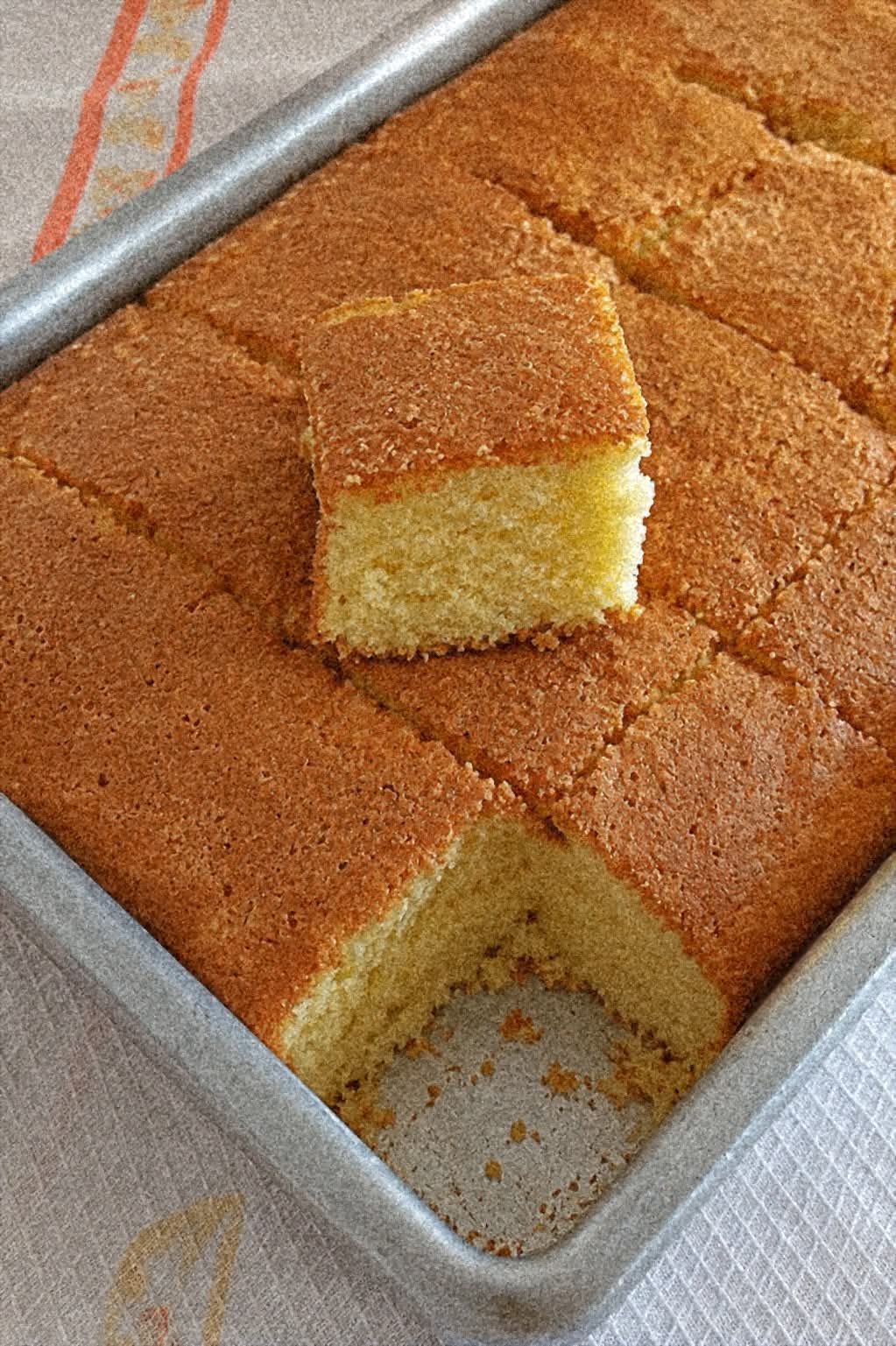
Meskouta is a gold-hued cake with a delicate, fine-pored crumb structure. Depending on the household, it is baked in a tube/Bundt pan or as a single-layer tray bake. The flavor balances the natural sweetness of sugar with the bright, citrusy punch of fresh orange juice, aromatic zest, and subtle floral notes.
Ingredients Quantity
For the Batter:
- Large eggs: 4, room temperature
- Granulated sugar: 1 cup (200 g)
- Neutral vegetable oil or mild olive oil: 3/4 cup (180 ml)
- Freshly squeezed orange juice: 3/4 cup (180 ml)
- Fresh orange zest: 1 to 2 tablespoons (from 2 medium oranges)
- Orange blossom water: 1 tablespoon (optional, for regional flavor)
- Vanilla extract: 1 teaspoon
- All-purpose flour: 2 1/2 cups (300 g)
- Baking powder: 1 tablespoon (12 g)
- Salt: 1/2 teaspoon
Optional Additions
- Citrus Variations: Swap half of the orange juice with lemon juice for an extra tangy twist.
- Nutty Texture: Replace 1/2 cup of all-purpose flour with finely ground almond flour.
- Garnish: Dust with powdered sugar, drizzle with apricot jam and toasted coconut flakes, or pour over a simple glaze made of 1 cup powdered sugar mixed with 2 tablespoons orange juice.
Instructions
- Preheat & Prepare: Preheat your oven to 350°F (175°C). Grease a 10-cup Bundt pan or a 9×13-inch baking tray generously with oil and dust lightly with flour.
- Infuse Sugar: In a large bowl, rub the fresh orange zest into the granulated sugar with your fingertips until fragrant.
- Whip Wet Ingredients: Add the eggs to the sugar and beat with a hand or stand mixer on medium-high speed for 3 to 5 minutes until pale, thick, and fluffy. Slowly pour in the oil while mixing, followed by the orange juice, orange blossom water, and vanilla extract.
- Sift Dry Ingredients: In a separate bowl, whisk together the flour, baking powder, and salt.
- Combine: Gently fold the dry ingredients into the wet batter using a spatula just until combined—do not overmix.
- Bake: Pour the batter into the prepared pan. Bake for 40 to 45 minutes (30–35 minutes if using a flat sheet tray) until a wooden skewer inserted into the center comes out clean.
- Cool: Allow the cake to cool in the pan for 10 minutes before turning it out onto a wire rack to cool completely.
Tips for Success
- Emulsify Thoroughly: Beating the eggs and sugar until pale creates the structure needed to trap air, giving the cake its light rise without butter.
- Zest First: Always zest your citrus before squeezing the juice to make extraction easier.
- Room Temperature Ingredients: Ensure eggs and juice are at room temperature to prevent the batter from breaking during mixing.
Nutritional Information
(Estimated values per serving, based on 12 slices without optional glaze)
- Calories: 240 kcal
- Total Fat: 10 g
- Saturated Fat: 1.5 g
- Cholesterol: 55 mg
- Sodium: 140 mg
- Total Carbohydrates: 33 g
- Dietary Fiber: 1 g
- Sugars: 17 g
- Protein: 4 g
Embracing Healthful Indulgence
Because traditional Meskouta is naturally dairy-free and relies on heart-healthy unsaturated fats (such as canola, sunflower, or light olive oil) instead of saturated fats, it presents a lighter profile than butter-heavy European sponges. Incorporating fresh citrus juice and zest adds a natural boost of Vitamin C.
For a more wholesome variation, you can replace up to half of the all-purpose flour with whole wheat pastry flour or almond meal, and reduce the sugar slightly without sacrificing texture.
Conclusion
Meskouta stands as a testament to the beauty of simple baking. By taking everyday pantry staples and elevating them with fresh citrus and warm hospitality, this Moroccan classic delivers a slice of comforting tradition in every bite.
Recommendation
Pair a warm slice of Meskouta with a freshly poured glass of hot Moroccan mint tea or a strong espresso. It serves as an ideal recipe for beginner bakers, informal family gatherings, or weekend breakfasts.
Would you like a step-by-step recipe for the traditional orange blossom glaze, or advice on adapting this recipe to be completely gluten-free?